When a loved one passes, many Quebec families find themselves at a loss, faced with traditional ceremonies that no longer quite reflect who they are. And yet, for thousands of years, humanity has invented mourning rituals of extraordinary richness. Here is a journey through these traditions and, above all, concrete ideas for creating a ceremony right here in Quebec that truly feels like you.
The essentials
- Grief is a universal experience, but how it is expressed varies deeply from one culture to another.
- From Mexico’s Día de los Muertos, inscribed on UNESCO’s intangible heritage list since 2008, to Ghana’s figurative coffins, each rite reveals a unique vision of death.
- In Japan, the kotsuage ritual invites family members to gather the bones of the deceased with chopsticks, a gesture of infinite tenderness.
- Indigenous Peoples of Canada hold a vision in which the deceased joins a natural cycle and continues to accompany the living.
- In Quebec, personalized celebrations of life are replacing traditional rites, opening the door to meaningful blending of traditions.
Why are funeral rituals essential to our healing?
When someone we love dies, the world stops. Without any bearings, many grieving people feel lost, sometimes for years.
That is precisely the role of funeral rituals: to offer structure to emotional chaos. They give the body something to do, the voice something to say, and the hands something to hold, to place, to light. They transform an unbearable absence into a symbolic presence.
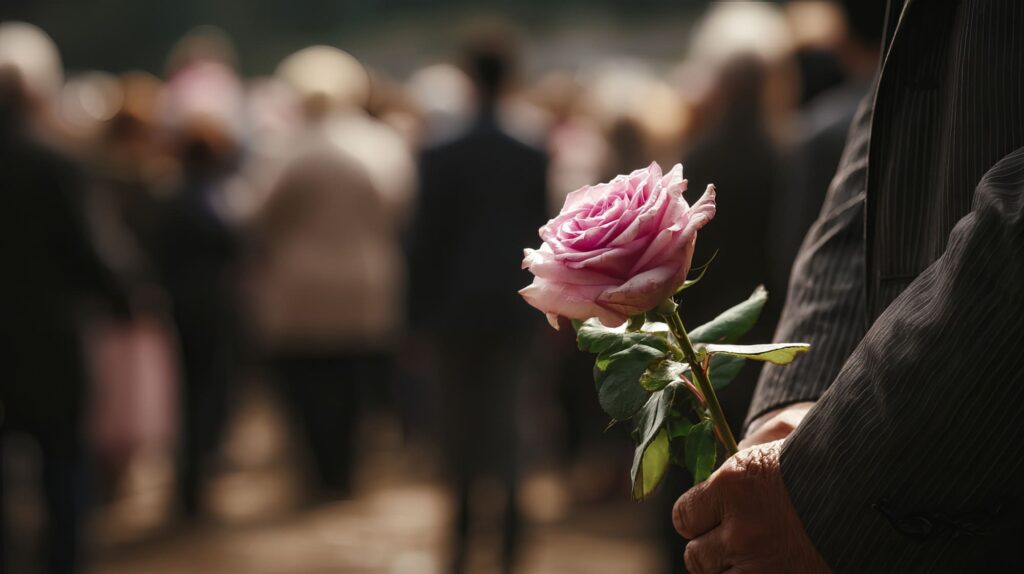
Anthropologist Luce Des Aulniers, professor emerita at UQAM and founder of Quebec’s first academic program in death and grief studies, puts it this way: the ritual carries an important symbolic dimension that gives meaning to loss, one we invest in believing it will help us feel better, and which points to a reassuring higher order. The rite marks a shift in time: it acknowledges what we are leaving behind and what we are learning to let go of.
A journey into tradition: how the world celebrates life after death
These traditions are not mere curiosities from faraway places. Each one tells a vision of the world, a particular way of thinking about what connects the living to those who have gone. Their diversity reflects a universal truth: there is no single right way to mourn, only as many paths as there are cultures.
Mexico and the Día de los Muertos: A Celebration of Memory
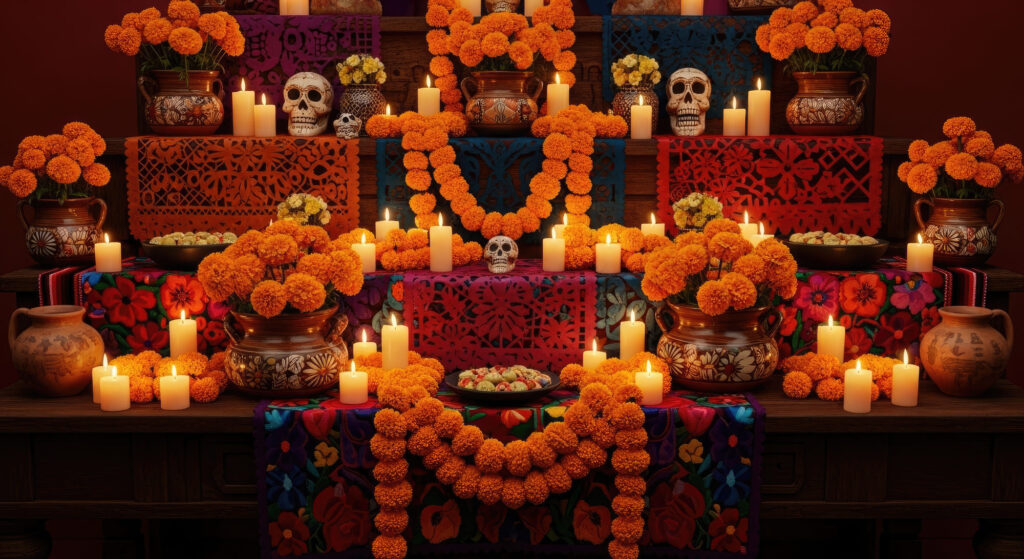
In Mexico, death is not a wall; it is a door. Each year, from October 31 to November 2, families prepare colourful altars (ofrendas) adorned with photographs, candles, cempasúchil petals, and the favourite dishes of those who have passed.
UNESCO describes the tradition this way: as practiced by Indigenous communities in Mexico, the Día de los Muertos celebrates the brief return to Earth of deceased relatives and loved ones. To help the spirits find their way home, families line the path from the house to the cemetery with flower petals, candles, and offerings. The ceremony was inscribed in 2008 on the Representative List of the Intangible Cultural Heritage of Humanity.
What strikes you most is the absence of darkness. Far from a stifled grief, families dance, eat, and share funny stories about those they have lost. Memory becomes joyful, because to forget would be worse than losing.
Ghana's personalized coffins: a final resting place in one's own image
In the Greater Accra region of southern Ghana, the Ga people have developed a tradition unlike any other in the world: abebuu adekai, literally “boxes of proverbs.” These are custom-sculpted coffins shaped like airplanes, fish, cocoa pods, Bibles, or cars, depending on what defined the person who passed.
According to Ga beliefs, the deceased attain the status of ancestors and continue their work in the afterlife. A fisherman is therefore buried in a coffin shaped like a fish or a dugout canoe, a taxi driver in a car, and a priest in a Bible. The logic is luminous: if life continues on the other side, you might as well arrive prepared.
These works have been exhibited since 1989 in museums around the world, from the British Museum in London to the Centre Pompidou in Paris, as well as galleries in New York, Tokyo, and Berlin. They embody a powerful principle: a coffin tells a life. An idea that increasingly inspires Quebec families who wish to personalize an urn or a commemorative object.
Quiet respect in Japan: the kotsuage ritual
At the opposite end of the spectrum from Mexico’s vibrancy, Japan offers one of the most moving funeral ceremonies precisely because of its restraint. After cremation, which is nearly universal in the country, the family gathers for the kotsuage.
The ritual is of rare delicacy. Participants, standing in pairs, use chopsticks to place the bones and ashes of the deceased one by one into a prepared urn. This ritual is found nowhere else in the world. The bones are gathered starting from the feet and moving upward to the skull so that the deceased remains in an “upright” position in the afterlife.
The urn is then placed on a family altar (butsudan) for 49 days, giving the soul time to complete its passage. What speaks to the Quebec heart in this tradition is the shared act of touch and, above all, the idea of a long, unhurried grief, ritualized in stages over time.
Indigenous Peoples in Canada: a connection to the land
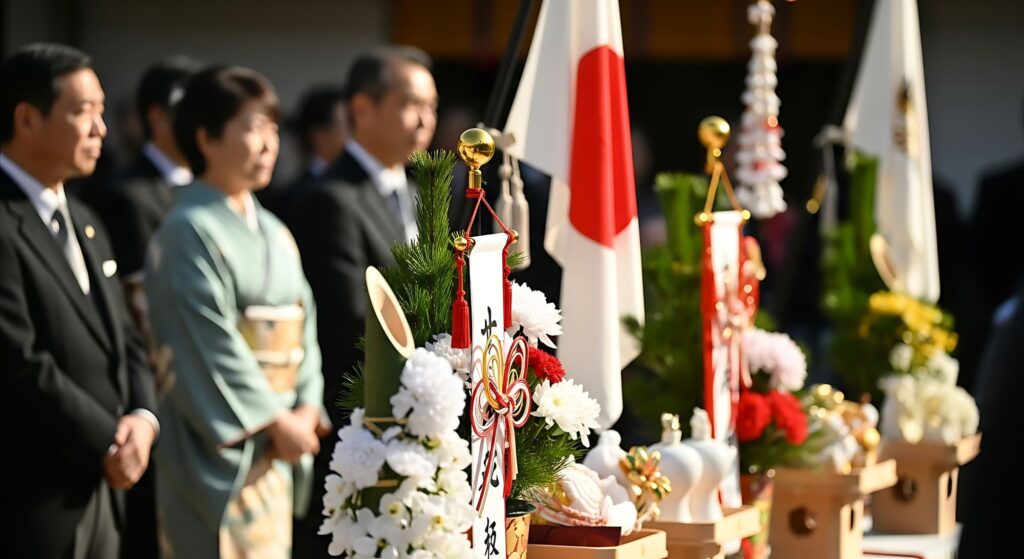
Closer to home, Indigenous Peoples of Canada carry visions of grief deeply rooted in their relationship to the land and the natural cycle. According to the Canadian Encyclopedia, members of First Nations sometimes choose a coffin decorated with Indigenous art, particularly when the ceremony includes an open casket.
Among the Huron-Wendat of Quebec, the Feast of the Dead was historically a major collective event. The academic journal Frontières notes that the Huron-Wendat believed in the existence of two souls. The first, material, left the body after death to wander for a time before being reborn in the body of a newborn. The second, immaterial, remained with the bones of the deceased.
Among the Dene of the Northwest Territories, Radio-Canada reports that commemoration services begin with community members sharing memories of the person who has passed. During this time, elders typically lead a prayer. Later, the community gathers for a funeral service, followed by a large feast that sometimes includes a drum dance to celebrate the life of the elder. Living memory is held within the community, not just in stone.
Islam: a return to simplicity
In the Muslim tradition, funerals follow the principles of simplicity and timeliness. The body is washed according to a precise ritual (ghusl), wrapped in a plain white shroud (kafan) with no seams or ornaments, then buried as quickly as possible, ideally within 24 hours of death. The grave is unadorned, placing all the deceased on equal footing before God, rich or poor. Official mourning lasts three days for the family, and four months and ten days for widows. This paring back is itself a lesson: less material, more inner presence.
The evolution of grief in Quebec: toward more personal ceremonies
In Quebec, the funerary landscape is changing rapidly. Cremation, once marginal, has become the norm, and families are now inventing new forms of ceremony: outdoors, in small gatherings, online, or around emerging techniques such as aquamation.
This cultural plurality, fed by immigration and growing religious diversity, is enriching practices. A Quebec family of Haitian origin may blend Catholic tradition with more expressive communal singing. A family from the Vietnamese diaspora may incorporate an ancestral altar into a civil service. Blending has become the new norm, and that is precisely where inspiration from the world’s rituals takes on its full meaning.
For accompaniment professionals such as lay celebrants, ritualists, and funeral artisans, this openness is an opportunity. It allows them to co-create with families ceremonies truly tailored to the person who has gone, rather than imposing a single framework.
Did you know? The SHERPA Project, led by the CIUSSS du Centre-Ouest-de-l’Île-de-Montréal, has been producing tools for over 20 years to support practitioners working in multicultural contexts, including grief practices.
3 ideas for personalizing a mourning ritual today
Before exploring these suggestions, keep one principle in mind: a ritual does not need to be grand to be powerful. Its strength comes from the intention you bring to it and how well it reflects the person you are honouring. Here are three concrete ideas inspired by traditions from around the world.
1. Create a memory altar, Mexican style
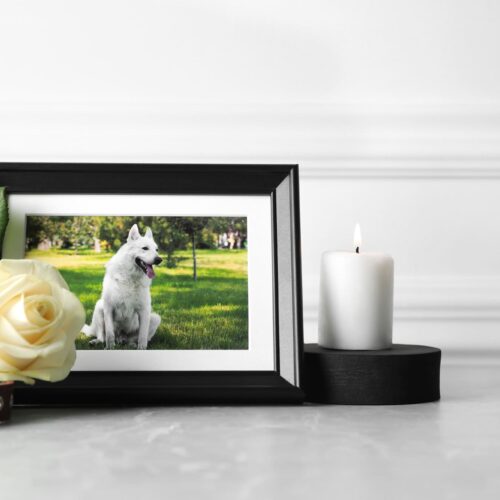
Inspired by the Día de los Muertos, this practice requires nothing more than a small table, a cloth, a framed photograph, a candle, and three or four objects the person loved: a favourite book, a mug, and a piece of jewellery. You might place a fresh flower there every Sunday. This simple, recurring gesture helps the grieving mind find structure in the absence.
2. Incorporate a unique symbolic object into the ceremony
In the spirit of Ghana’s figurative coffins, choose an object that captures something essential about the person who has gone. A musical instrument, a gardening tool, a compass. This object can be placed on the coffin or urn, then passed on to a loved one afterward. For families who experienced breastfeeding as a meaningful chapter, transforming a last drop of breast milk or a lock of hair into a commemorative piece of jewellery is another way of giving that unbreakable bond a lasting form.
3. Embrace a long, slow mourning, Japanese-style
Rather than concentrating everything into a single day, plan several stages: the initial ceremony, then a gathering at 49 days (a direct nod to Japan), a commemoration at six months, and an annual anniversary. This ritualization over time more closely mirrors the actual rhythm of grief, which unfolds over years, not hours.
At La Joie en Rose, we believe every life deserves to be celebrated with a precious and lasting object. Our commemorative jewellery, crafted from breast milk, hair, or ashes, gives shape to the bond with a loved one.

What psychology tells us: why we need rituals
Contemporary science confirms what cultures have understood for millennia. Rituals reduce anxiety in the face of the uncontrollable, provide a symbolic closure for what is otherwise unacceptable, and create a social space where pain is acknowledged and held. Without ritual, grief tends to stall and become pathological. With ritual, even a minimal one, inner movement becomes possible.
That is precisely why drawing from the world’s traditions is not an act of cultural consumption; it is an act of care. You are not “stealing” the Día de los Muertos by lighting a candle in front of your mother’s photograph. You are connecting, humbly, to the long human chain of those who have had to grieve and who invented these gestures to avoid being swallowed whole by their loss.
Honouring memory, in your own way
Mourning rituals from around the world offer us a precious gift: permission to reinvent. No one can tell you how to mourn the person you have lost. But thousands of years of human wisdom gently remind you that making a gesture, lighting a candle, keeping an object, or saying a name is exactly the right thing to do.
In Quebec, a land of blending and funerary transformation, that freedom has become an accessible reality. All that remains is to reach for it, with gentleness, with creativity, and with the trust that your love has no manual to follow.

Comments are closed for this article!