Combination feeding: how to introduce it gently

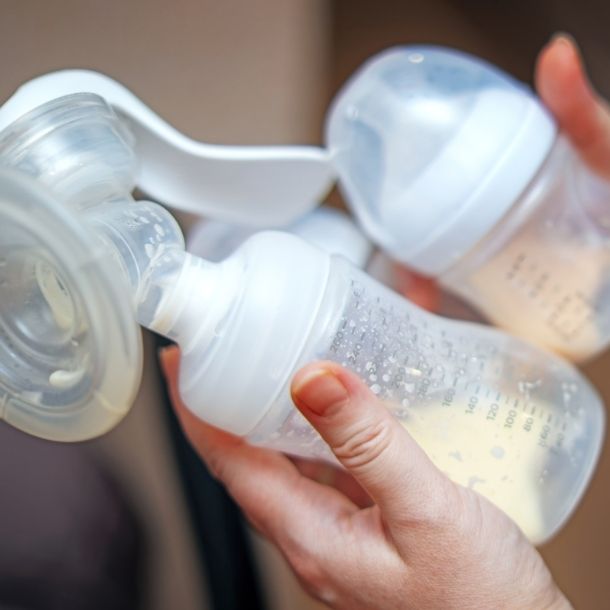
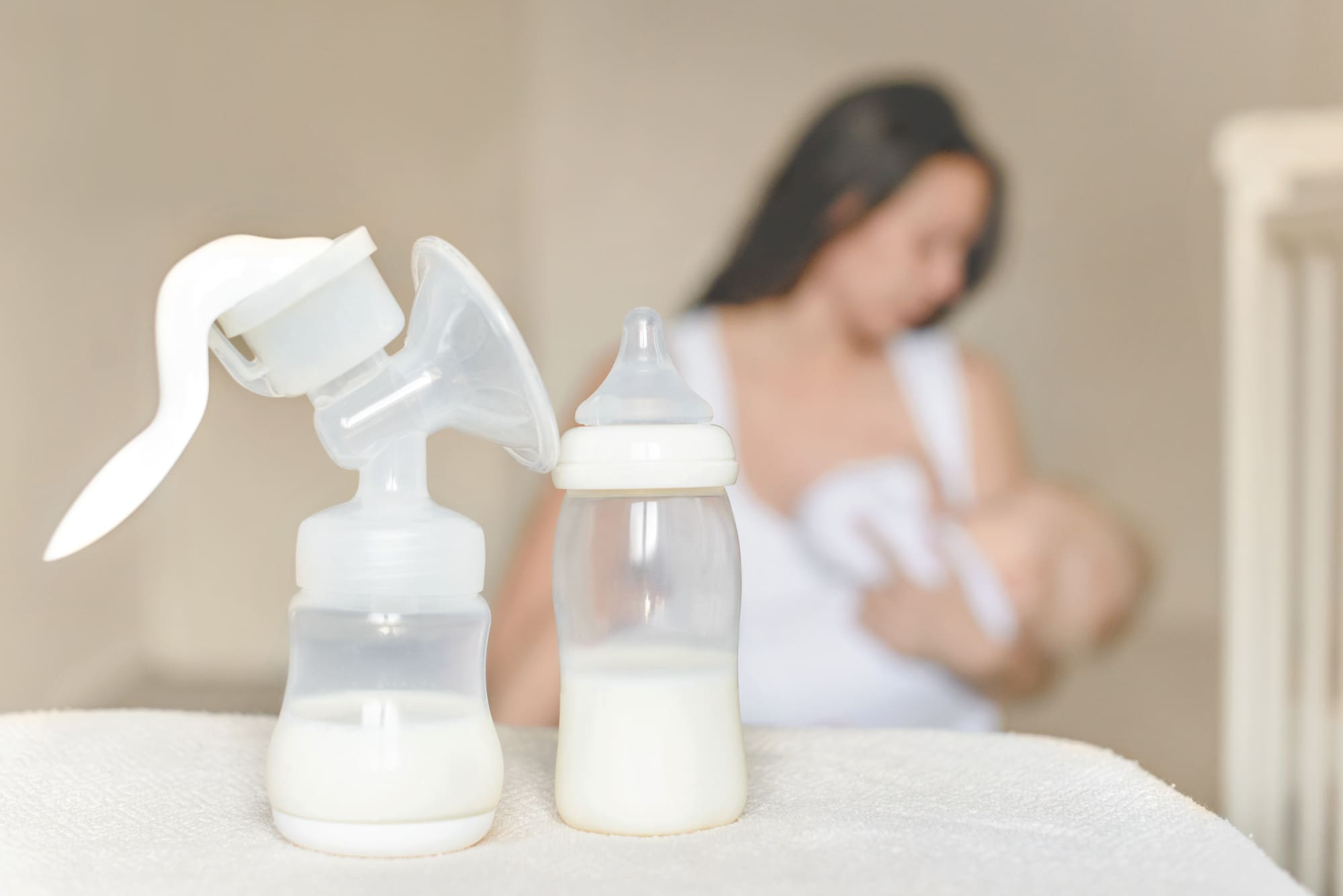
Tire-lait et biberon de lait maternel au premier plan, avec une mère allaitant son bébé en arrière-plan.

Combination feeding blends breastfeeding at the breast with bottles. More and more Quebec mothers choose this approach to balance a return to work, fatigue, or simply a need for more flexibility. With the right support, it lets you continue breastfeeding at your own pace, without pressure or guesswork.

Key takeaways

  • Combo feeding blends breastfeeding at the breast with bottles of breast milk or formula, also called mixed feeding.
  • Health professionals generally recommend waiting until breastfeeding is well established, usually around 4 to 6 weeks, before introducing a bottle.
  • In Quebec, 66% of babies were breastfed during their first four months of life in 2020 to 2021, up from 41% in 1997 to 1998.
  • Breast milk and formula should not be mixed together in the same bottle.
  • Resources like Nourri-Source and IBCLC-certified lactation consultants are available in Quebec to support you every step of the way.

What is combination feeding

Combination feeding means feeding a baby both at the breast and by bottle, whether that bottle contains expressed breast milk or infant formula. It is also known as mixed feeding or partial breastfeeding. Unlike exclusive breastfeeding, it does not require breast milk to be the baby’s only source of nutrition.

The balance between breastfeeding and bottles varies enormously from one family to another. Some mothers keep one feed at the breast in the morning and evening, while others alternate throughout the day. There is no single right way to do it.

Why choose combination feeding

The reasons families choose combo feeding are personal, but three situations come up more often than others. Each family’s context shapes the decision differently, and there is no wrong reason to make this choice.

Returning to work

Parental leave comes to an end, and pumping at work is not always simple to organize. Combo feeding lets you keep part of your breastfeeding routine while leaving some feeds to your baby’s caregiver.

Low milk supply or fatigue

Some mothers produce less milk than they would like or simply need a break after demanding weeks. Topping up with a bottle is not a failure. It is a way to preserve breastfeeding rather than stopping it abruptly.

Involving the second parent

Giving a bottle allows the second parent, or another loved one, to feed the baby and build their own bond while giving mom a chance to rest.

Père donnant le biberon à son bébé, accompagné de sa conjointe et de leur jeune enfant dans le salon familial.

When to start combination feeding

This question comes up for nearly every mother considering combination feeding. Most health professionals recommend waiting until breastfeeding is well established before introducing a bottle, generally 4 to 6 weeks after birth. Introducing a bottle too early can reduce stimulation at the breast and, in turn, milk production, since supply responds to demand.

In Quebec, 66% of babies were breastfed, exclusively or not, during their first four months of life in 2020 to 2021. That is up from 41% in 1997 to 1998, according to the Institut de la statistique du Québec (ISQ, November 2024). That growth includes more families who, like you, combine breastfeeding and bottles instead of choosing one.

Every situation is different. A health professional or an IBCLC-certified lactation consultant remains the best person to advise you on the right timing for you, especially if you are considering introducing a bottle earlier.
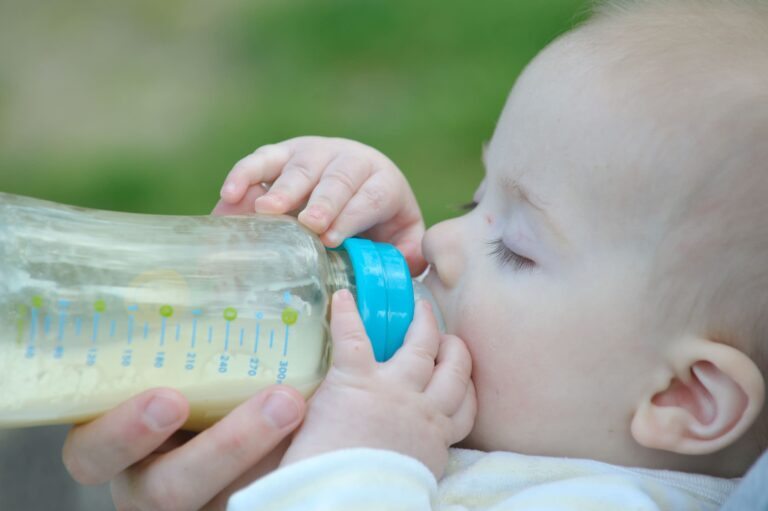
Bébé buvant du lait au biberon en tenant celui-ci avec ses mains.

How to introduce the bottle without disrupting breastfeeding

A gentle transition generally rests on two principles shared by breastfeeding professionals: taking it gradually and choosing the right equipment.

Choosing the first feed to replace

Lactation consultants often suggest starting with a single feed, usually the midday one, which tends to be the least abundant. Wait a few days before replacing a second one, if you choose to. Every baby and every milk supply is different, so an IBCLC consultant or a Nourri-Source breastfeeding support volunteer can help you adapt this pace to your reality.

Preventing nipple confusion

The breast and the bottle require different sucking patterns, which explains why some babies develop a preference for one over the other. A slow-flow nipple and a gradual introduction are commonly recommended by breastfeeding professionals to limit this risk. If your baby shows signs of refusing the breast, a resource like Nourri-Source or a lactation consultant can look at the situation with you.

Can you mix breast milk and formula in the same bottle

This practice is generally not recommended, mainly for storage reasons. Breast milk and infant formula follow different storage rules. If your baby does not finish the bottle, the leftover portion must be discarded according to whichever timeframe is shorter, which often wastes precious breast milk. Offering the two separately, in two different bottles, is the approach generally suggested by health professionals.

How to limit a drop in milk supply

A drop in milk supply is common when starting combination feeding, and there are documented ways to limit it.

Pumping regularly

Pumping when you are away from your baby is commonly recommended by lactation consultants to maintain the stimulation your body needs to keep producing milk. Many mothers also use this time to build a frozen stash, handy for unexpected situations.

Recognizing the signs early and asking for help

Breasts that feel less full, or a baby who seems unsatisfied after a feed, are signs worth paying attention to. Rather than trying to manage everything alone, an IBCLC lactation consultant or a Nourri-Source breastfeeding support volunteer can assess your situation and suggest options suited to you. In the meantime, resting well and staying hydrated can only help.

How long does breast milk keep

Storing breast milk safely means following precise rules, whether it is milk expressed for combo feeding or milk kept as a reserve.

Breast milk
Room temperature
Refrigerator
Freezer
Freshly expressed
4 hours (about 26 °C / 79 °F)
Up to 8 days (4 °C / 39 °F)
6 months (freezer compartment inside the fridge) to 12 months (deep freezer)
Thawed
1 hour
24 hours
Never refreeze

These figures come from guidelines published by the Institut national de santé publique du Québec (INSPQ) and Naître et grandir. These durations are not cumulative, and if you are ever unsure, your healthcare provider remains the best resource to consult.

Where to find breastfeeding support in Quebec

You rarely have to navigate combination feeding alone, and several Quebec resources exist to support you with qualified help. La Fédération Nourri-Source connects families with volunteer breastfeeding support helpers across Quebec, offered free of charge. For every piece of breast milk jewelry sold, La Joie en Rose also donates $2 to this federation, a concrete way to support breastfeeding women and families. A certified IBCLC lactation consultant can assess your situation individually, especially useful in case of pain or a marked drop in supply. La Leche League Canada also offers mother-to-mother support by phone or in person.

If you have surplus milk once your combination feeding routine is stable, you can also donate it to the breast milk bank managed by Héma-Québec, under certain conditions.

FAQ: combination feeding

Lactation consultants often suggest trying a different nipple, or having someone apart from mom offer the bottle in a different room. Patience is crucial, as multiple attempts are frequently necessary. If the situation continues, a lactation consultant or a Nourri-Source breastfeeding support volunteer can observe the situation with you.

A health professional can help you choose the best formula by considering your baby’s age, specific needs, and any allergy risks. No single formula is universally better than another.

There is no universal ratio. Many families keep 2 to 3 feeds at the breast per day, topped up with bottles as needed. What matters most is watching your baby’s hunger and fullness cues rather than following a rigid schedule.

In many cases, yes, usually by increasing feed frequency to stimulate supply again. An IBCLC lactation consultant is best placed to support you through this process.

Every situation is different. If you have doubts, especially if you are considering introducing a bottle before 6 weeks, a health professional or lactation consultant can reassure you and adapt the recommendations to your reality.

No. Every feed or bottle of breast milk keeps its benefits, regardless of the proportion compared to formula. Combination feeding is still breastfeeding, period.

Illustration de différentes familles prenant soin de leur bébé : allaitement, biberon, promenade en poussette et moments en famille.

Your breastfeeding, your pace

Whether it lasts a few weeks or several months, combo feeding is simply one way to live this chapter with your baby, on your own terms. For many mothers, the moment breastfeeding changes shape, or nears its end, also sparks a wish to keep a tangible trace of it. If that sounds like you, discover how to turn your breast milk into a keepsake jewel, another way to honor a journey that is yours.

$2 per Breast Milk Jewel sold, all models combined, is donated to La Fédération Nourri-Source. A great way to support breastfeeding women and families.

What are the benefits of breastfeeding for mothers

Maman allaitant son bébé, favorisant le bien etre maternel et les bienfaits physiques et émotionnels de l'allaitement.

Breastfeeding goes far beyond nourishing your baby.
From the very first minutes, your body activates a powerful hormonal response that supports physical recovery, protects long-term health, and helps restore energy.

The benefits of breastfeeding for mothers are real, measurable, and supported by scientific research.
This period can also become a meaningful investment in your well-being, just as much as the care you provide to your child.

Breastfeeding and physical recovery after childbirth

Breastfeeding actively engages the body after birth.
This process supports a natural and gradual recovery.

When you breastfeed, your body releases an essential hormone called oxytocin.
This hormone stimulates uterine contractions after delivery.
These contractions help the uterus return to its normal size more quickly.

This process can help:

  • reduce postpartum bleeding
  • support physical recovery
  • promote a greater sense of physical well-being

Breastfeeding continues the physiological work your body began during pregnancy.

Breastfeeding and daily energy support

The first weeks with a newborn are intense.
Sleep deprivation and constant adjustments are very real.

Producing breast milk requires energy.
Your body uses the reserves stored during pregnancy to meet this demand.

This is why breastfeeding can contribute to gradual postpartum weight loss.
This effect is not about appearance.
It reflects a natural physiological process that respects your body’s rhythm.

Long-term positive effects on health

Research shows that breastfeeding lowers the risk of certain chronic conditions.
These benefits directly affect women’s health.

Breastfeeding can help:

  • reduce the risk of type 2 diabetes
  • support cardiovascular health
  • improve long-term metabolic balance

These effects increase with longer breastfeeding duration.
They are especially noticeable with exclusive breastfeeding.

Breastfeeding and cancer prevention

One benefit still remains widely overlooked.
Breastfeeding plays a role in preventing certain female cancers.

Scientific data clearly shows a link with reduced breast cancer risk.
The longer the breastfeeding period, the lower the risk becomes.

This effect results from:

  • protective hormonal changes
  • reduced lifetime exposure to estrogen

Public health authorities recognize these benefits.

Emotional health benefits of breastfeeding

Breastfeeding also influences emotional well-being.
Oxytocin released during breastfeeding promotes calm and relaxation.

Skin-to-skin contact strengthens this biological response.
This closeness can help lower stress and create a sense of security.

For some women, breastfeeding helps them:

  • feel calmer
  • strengthen the bond with their baby
  • experience early motherhood more peacefully

Every experience remains unique.
These effects are neither guaranteed nor required.

The benefits of breastfeeding for babies

Before going further, it helps to remember that this period also benefits the baby.
The biological processes involved support development and early adaptation to the outside world.

These effects are closely connected to the benefits of breastfeeding for babies, especially in terms of immunity, digestion, and emotional security.
They develop gradually, following the rhythm of both baby and mother, with no single model or obligation.

Breast milk as a living and adaptive food

Breast milk changes constantly.
It adapts to your baby’s needs and to your own body.

Breast milk is a complete food.
It contains proteins, antibodies, and enzymes.
It remains naturally easy for infants to digest.

When your baby nurses, your body receives precise signals.
These signals adjust both milk production and milk quality.

Exclusive breastfeeding during the first six months

Canadian recommendations are clear.
Experts recommend exclusive breastfeeding during the first six months of life.

This means:

  • only breast milk
  • no other liquids
  • no other foods

This choice supports infant health.
It also strengthens certain metabolic benefits for mothers.

Breastfeeding without pressure or guilt

Breastfeeding is a personal choice that can take many forms.
Some women breastfeed for a long time, others for a few weeks, and some choose a different path.

Information exists to support informed decisions, never to create guilt.
If you choose to breastfeed, you also take a step toward your own well-being.

This choice deserves respect, recognition, and support, regardless of your journey.

Breastfeeding in everyday life

Breastfeeding does not always look like the idealized images often shared.
It requires adjustment, time, and sometimes patience.

Seeking support is normal and valid.
In Canada, many resources exist to guide you at every stage.

You do not need to prove anything to anyone.
Your experience is unique, and your journey belongs to you.

Breastfeeding and maternal health: key takeaways

Breastfeeding can support both physical and emotional health.
It is a choice that can benefit both mother and child.

We believe in clear, human, science-based information.
You deserve to understand the real effects of your decisions.

Breastfeeding can nourish your baby.
It can also help take care of you.

FAQ Common questions about the benefits of breastfeeding for mothers

For some women, yes.
Breastfeeding uses energy and mobilizes body reserves.
Everybody responds differently.

Studies show a reduced risk of breast cancer.
Breastfeeding duration plays an important role.

The early phase can feel demanding.
Over time, some women experience better balance and energy.

No.
It is a recommendation, not an obligation.
Every situation is different.

Yes, during the first six months of life.
It provides complete nutrition and remains easy to digest.

The benefits of breastfeeding for babies

Un bébé fermant les yeux pendant qu'il est allaité par sa maman.

Welcoming a newborn changes everything. You naturally want to give your child the very best, especially during the first months. Breastfeeding can play an essential role during this time. As parents, we often support families who want to understand why breast milk matters so much for a baby’s health.

In this article, you will find clear and reassuring information about the benefits of breastfeeding for babies, based on trusted recommendations from Health Canada and the World Health Organization. These insights can help whether you already breastfeed your baby or are still considering it during pregnancy.

Why breast milk is the ideal food during the first six months

Breast milk is designed to meet the specific needs of infants. Its composition evolves after birth to match your baby’s rapid growth.

It contains everything a newborn requires: energy, protein, vitamins, minerals, essential fats, water, and antibodies. No other food adapts as quickly to your baby’s age and health.

Experts recommend exclusive breastfeeding from birth to six months. This ensures optimal nutrition and gentle digestion. Thanks to its natural texture and unique composition, breast milk is easy for breastfed babies to digest.

The benefits of breastfeeding on immunity and infant protection

Breast milk is a powerhouse of protection. It is filled with strong antibodies that help your baby defend against infections, which is especially important in the early months when the immune system is still developing.

These antibodies act like a shield against common illnesses, including:

  • respiratory infections
  • ear infections
  • gastroenteritis
  • urinary infections

When we talk about health benefits, protection against infections comes up again and again. It is one of the most documented advantages. Several studies show that breastfeeding significantly reduces the risk of complications and hospitalizations linked to these illnesses.

A positive impact on your baby’s digestive system

Breast milk naturally supports your baby’s digestive system. Its composition makes nutrient absorption easier right from the start.

It contains unique proteins that differ from cow’s milk proteins. These proteins are gentler on your newborn’s delicate digestive tract. They reduce the risk of constipation, colic, and reflux.

We often see that breastfed babies show better digestive comfort. They absorb nutrients more effectively and develop a healthy microbiome, which plays an important role in overall growth and development.

Breast milk supports brain growth and development

A baby’s brain develops very quickly after birth. Breast milk contains essential fats, including DHA, that help support this critical process.

These nutrients contribute to the development of the nervous system, vision, and cognitive skills. Several studies note a slight cognitive advantage in breastfed babies, especially when breastfeeding continues for several months.

Breastfeeding helps reduce certain long-term health risks

Breastfeeding does more than protect your baby now. It can also help lower certain health risks later in life, including:

  • reduced risk of obesity
  • fewer allergy-related issues
  • lower risk of type 2 diabetes
  • better metabolic regulation

These effects come from the unique composition of breast milk and its influence on early metabolic development.

The benefits of breastfeeding for you as a mother

Even though this article focuses on babies, breastfeeding also brings important benefits for mothers.

Breastfeeding helps lower the risk of certain health conditions, including breast cancer. It also supports postpartum recovery thanks to hormones released during feeding. These hormones help the uterus return to its normal size and reduce postpartum bleeding.

Breastfeeding can also strengthen the emotional bond between mother and baby. Skin-to-skin contact, eye contact, and closeness help create a unique connection.

Breast milk supply naturally adapts to your baby’s needs

Your body intuitively adjusts to your baby’s feeding patterns. Over time, your milk supply increases or decreases based on how much your baby drinks.

If your baby feeds more often, your supply increases. If they feed less, your supply decreases. This automatic adjustment makes breastfeeding even more practical.

Health Canada highlights that infants regulate their own intake, which also helps prevent early weight issues.

Breast milk adapts continuously

The composition of breast milk changes throughout the day and even during a single feeding. Morning milk may contain more energy, while evening milk often contains more sleep-supporting hormones.

This natural adaptability is unique. No commercial formula can replicate the biological richness of breast milk.

What if you have excess milk?

Some mothers produce more milk than their baby needs. If you wonder what to do with leftover breast milk, you can store it, donate it, or use it in different ways depending on your situation.

In Canada, several provinces have public breast milk banks to support vulnerable babies, especially premature newborns. These banks collect and distribute pasteurized donor milk adapted to infants’ needs.
For example, the public breast milk bank operated by Héma Québec plays a key role in Quebec, and similar banks exist in Ontario, Alberta, and British Columbia.

Breastfeeding and the introduction of solid foods

Around the six-month mark, recommendations encourage introducing solid foods gradually.

However, continuing to breastfeed after six months remains highly recommended. Breast milk continues to provide antibodies and essential nutrients, and it still plays an important emotional role for your baby.

The importance of exclusive breastfeeding to protect against infections

Exclusive breastfeeding creates a natural immune barrier. It reduces how often babies get sick and how severe infections can be, especially in environments with higher exposure risks.

Breastfed babies often seem more resilient because their bodies receive constant immune protection from their surroundings.

Every family follows its own pace

Even though breastfeeding offers many benefits, every family needs to move at its own rhythm. You can breastfeed for a few weeks, several months, or longer, depending on what feels right for you.

You are free to choose what works best for your health, your comfort, and your baby’s needs.

In summary: why breastfeeding is a precious gift for your baby

Here is what to remember:

  • Breast milk perfectly meets newborn needs
  • It actively protects against infections and supports the immune system.
  • It is easy to digest and gentle for your baby
  • It supports brain development
  • It promotes growth, health, and overall development
  • It also offers important health benefits for mothers

How to keep a unique memory of your breastfeeding journey

Une maman portant une bague souvenir en lait maternel, symbole précieux de l'allaitement, serrant son châle près du visage dans un moment tendre.

Every new mom experiences breastfeeding as an intense and unforgettable chapter. It builds a powerful bond between mother and child, one that deserves to be cherished. When you decide to stop breastfeeding, it’s only natural to want to keep a reminder of this special time. Today, more and more women choose to turn their breast milk into jewellery. These delicate creations honour your motherhood and preserve the beauty of your nursing moments.

Why keep a memory of your breastfeeding journey?

Breastfeeding isn’t just about feeding your baby. It’s an emotional, tender, and deeply personal experience. Each feeding becomes a quiet ritual where time seems to pause. But eventually, that chapter closes. Keeping a tangible reminder helps you carry this story forward and make it part of your family’s legacy. A breast milk keepsake, whether a ring, a necklace, or a pendant, stands the test of time and becomes a treasure you can pass on.

Breast milk jewellery: a precious idea that lasts

A breast milk jewel is much more than an accessory. It captures a few drops of your milk, carefully preserved and transformed. Every piece is unique because it holds your story and emotions. You can choose an elegant ring, a delicate pendant, or subtle earrings. Each handmade piece blends craftsmanship with meaning, reminding you of those intimate moments and celebrating your motherhood.

Jeune maman souriante portant des bijoux en lait maternel, boucles d'oreilles et collier, symbole précieux de son allaitement

How a breast milk jewel is made

The process respects your story and privacy. You send us a small amount of breast milk, and we use a special technique to stabilize and protect it. Then, we incorporate this precious trace into the jewellery you’ve chosen. The result is durable, elegant, and full of emotion. At La Joie en Rose, we pay close attention to every detail so your keepsake shines for years to come.

Breast milk jewellery that matches your style

Whether you want something subtle or a statement piece, the choice is yours. We offer many ways to personalize your keepsake: a simple modern ring, a symbolic necklace, an intricate pendant, or elegant earrings. Some designs include a birthstone, a name, or even a lock of hair to make the keepsake even more personal.

Each creation represents an eternal bond.

Beyond the jewellery itself, it’s the emotion behind it that truly matters. Wearing a breast milk jewel means keeping your breastfeeding story close and celebrating the strength and beauty of motherhood. You’re not just wearing jewellery; you’re wearing a piece of your journey, a memory that stays with you forever. These keepsakes often become emotional heirlooms that touch hearts for generations.

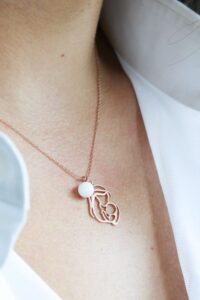
Collier en lait maternel porté au cou, avec médaille délicate en forme de silhouette de maman et bébé, symbole du lien de l'allaitement.

A meaningful gift for every mom

Whether you’re a new mother looking for an intimate keepsake or a mom marking the end of a long breastfeeding journey, you deserve a creation that reflects you. Every piece tells a different story: the story of a unique bond between mother and child. No two experiences are alike, and that’s why each jewel is entirely personalized. By choosing a breast milk keepsake, you’re choosing a memory that’s truly yours.

Bague en lait maternel présentée dans un écrin rose avec fleurs blanches.

La Joie en Rose Breast Milk Jewellery: A Precious Idea

Keeping a memory of your breastfeeding journey is a gentle and meaningful way to celebrate your motherhood. With a breast milk jewel, you turn an intimate experience into a timeless keepsake. An elegant ring, a delicate pendant, refined earrings, or a one-of-a-kind necklace: each piece is handmade to reflect your story. Because motherhood is an irreplaceable journey, you deserve a keepsake that stays close to your heart forever.

$2 per Breast Milk Jewel sold, all models combined, is donated to La Fédération Nourri-Source. A great way to support breastfeeding women and families.

Breastfeeding After Breast Cancer: What You Need to Know

Ruban rose dans les mains d'une jeune femme en soutien au cancer du sein

Facing a breast cancer diagnosis turns a woman’s life upside down. Once the treatments are over, many new moms ask themselves an important question: “Can I breastfeed after breast cancer?”
That question carries a mix of emotions, medical concerns, and a deep desire to give the best to their baby.
This article explains what’s possible, what the limits are, and what support you can find across Canada to guide you through this sensitive stage.

Can You Breastfeed After Breast Cancer?

There isn’t one simple answer; it depends on many factors. The type of treatment you received, the length of your remission, and the condition of your breast tissue all matter.

If you had breast-conserving surgery, you may be able to breastfeed with the breast that wasn’t treated, or sometimes even partially with the treated one.
If radiation therapy affected the breast tissue, milk production often becomes permanently reduced or stops entirely.
After chemotherapy, you need to wait until all medication has left your body, since these drugs pass into breast milk and can harm your baby.

In short, every case is different. That’s why you should always talk to your oncologist and, ideally, a lactation consultant before making a decision.

How Treatment Affects Breastfeeding

Every type of breast cancer treatment impacts breastfeeding differently.

Breast Surgery

After a full mastectomy, breastfeeding with the affected breast isn’t possible. If only one breast was removed, the other can still produce milk, though sometimes not enough for feeding exclusively through this method.

Radiation Therapy

Radiation permanently damages breast tissue. The treated breast usually can’t produce milk or produces very little. If the other breast wasn’t treated, it can still supply milk for partial or full feeding.

Chemotherapy and Hormone Therapy

Breastfeeding during chemotherapy is not safe because the drugs will be present in the breast milk. After treatment ends, you need to wait long enough for all medication to clear out of your system.
Hormone therapy, which often lasts for years, also makes breastfeeding impossible.

When Breastfeeding Becomes Possible Again

You may be able to breastfeed after breast cancer if:

  • You’ve finished all active treatments, and your doctors confirm no toxic substances remain in your system.
  • You have one breast unaffected by surgery or radiation that can still produce milk.
  • Your overall health allows it, and your doctors confirm that breastfeeding won’t compromise your recovery.
Femme enceinte portant une chemise blanche et un ruban rose en soutien à octobre rose

In some cases, partial breastfeeding is possible; you can nurse while supplementing with formula. Even partial breastfeeding is a valuable emotional, nutritional and bonding experience for you and your baby.

The Emotional Benefits of Breastfeeding After Cancer

For many survivors, breastfeeding feels like more than just feeding a baby; it’s a personal victory and a symbol of renewal.
It’s a way to reclaim your body after months or years of illness and treatment.
It’s a way to experience motherhood on your own terms, despite your medical history.
And it’s an intimate, comforting moment that helps emotional healing.
Every drop of milk becomes a gesture of courage and love, a sign that life goes on.

If Breastfeeding Isn’t Possible

If you can’t breastfeed, you still have safe, nurturing options for your baby:

  • Pumping: Even a small milk supply can be collected and offered to your baby.
  • Milk banks: In several regions of Canada, it’s possible to obtain pasteurized donor milk, especially for premature babies.
  • Infant formula: Safe and reliable, it can be used alone or combined with breast milk.

What truly matters is your well-being and your baby’s. The love, closeness, and care you give go far beyond your feeding method.

Support and Resources in Canada

Many organizations in Canada support women who want to breastfeed after breast cancer:

  • The Canadian Cancer Society offers phone support and reliable information.
  • The Canadian Partnership Against Cancer helps improve access to care and resources.
  • Specialized lactation clinics often collaborate with oncology departments to provide personalized guidance.

Surround yourself with professionals and peer support. Talking with other mothers who’ve lived similar experiences can be incredibly healing.

Practical Tips for Moms After Breast Cancer

If you’re considering breastfeeding after cancer, keep these tips in mind:

  • Talk to your doctors: They know your medical history best and can confirm what’s safe.
  • Prepare early: Learn how your treatments may have affected milk production.
  • Accept your body’s reality: Partial breastfeeding is still a success.
  • Seek support: A lactation consultant can guide you step-by-step.

Be kind to yourself: You’ve already been through so much; don’t add pressure.

FAQ: Breastfeeding After Breast Cancer

Yes, you can. The untreated breast may produce enough milk, though sometimes supplementation is needed.

It depends on the drugs used. Only your oncologist can confirm when it’s safe to start.

No, studies show that breastfeeding doesn’t raise recurrence risks. It actually supports your overall health.

You can turn to the Canadian Cancer Society, the Canadian Partnership Against Cancer, and local lactation clinics for guidance and support.

Breast Cancer Awareness Day: Supporting Mothers and Raising Awareness

Every year on October 19, Breast Cancer Awareness Day highlights the importance of prevention, screening, and support for women affected by breast cancer.
It’s also a chance to open up conversations about motherhood after cancer.
If you’re a new mom or planning to become one after a diagnosis, you’re not alone. Organizations such as the Canadian Cancer Society and the Canadian Partnership Against Cancer offer programs and resources designed for you.
Breast Cancer Awareness Month reminds us that every story is unique and every mother deserves compassion and support.

Breastfeeding and Cancer: Key Takeaways

Breastfeeding after remission is sometimes possible, but not always. Each journey is unique, and only your medical team can tell you what’s safe.
If breastfeeding isn’t possible, it doesn’t define your motherhood. What matters most is your connection with your baby, and your health.

We encourage you to learn everything you can, ask questions, and find the right support system. After cancer, every moment of life matters, and every choice deserves respect.

La Joie en Rose proudly supports the Canadian Cancer Society.
For each Seins jewellery piece sold, $10 is donated to the Canadian Cancer Society.

«One in eight Canadian women will face a breast cancer diagnosis in her lifetime, and more than 25,000 receive this diagnosis each year.
Help make a difference in women’s lives and for future generations by supporting the Canadian Cancer Society’s mission.»

When and How to Stop Breastfeeding Based on Your Child’s Age

Une maman donne le biberon à son bébé, dans une transition de l'allaitement vers le sevrage.

Every breastfeeding journey is different. Some moms choose to breastfeed for a long time, while others stop earlier. Whatever you decide, you deserve to feel at peace with your choice. We’ll guide you through the process, considering both your baby’s age and your own needs.

Why Weaning Should Be Gradual

Stopping breastfeeding all at once can be hard for both you and your baby. A gradual reduction helps protect your breasts from engorgement, reduces discomfort, and helps reassure your child. It also allows your milk supply to decrease naturally without shocking your body.

Gentle weaning also gives your baby time to adjust to other sources of nourishment. Whether it’s with a bottle, a cup, or a spoon, the transition works better step by step.

How to Stop Breastfeeding by Age

Each stage comes with its own needs. Breast milk plays a very different role for an infant under six months compared to a toddler over a year old. Here are some gentle, age-specific tips to help you stop breastfeeding smoothly and calmly.

Before 6 Months

If your baby is under six months, breast milk remains their main source of nutrition. Exclusive breastfeeding is recommended for the first six months. Stopping earlier means you’ll need a complete alternative.

In this case, replace feedings with age-appropriate infant formula. Always talk to a healthcare professional before starting the process.

Tips:

  • Replace one feeding with a formula bottle, then increase gradually.
  • Keep skin-to-skin contact during bottle feeds to maintain bonding.
  • Avoid cutting several feedings at once to limit engorgement.

Between 6 and 9 Months

Breast milk still plays a key role, but you can begin introducing solids around six months. The number of feedings will decrease naturally over time.

For stress-free weaning:

  • Replace the midday feeding with a solid meal and a little water.
  • Continue morning and evening feeds, which are often the most comforting.
  • Pay attention to your baby’s cues: some may go through nursing strikes that  affect the transition.
  • Remember, milk remains essential at this stage. Solids don’t replace the nutritional value of breast milk yet.

Between 9 and 12 Months

Weaning usually gets easier after nine months. Babies adapt better to bottles or sippy cups, and solid foods take on a bigger role.

Tips for this stage:

  • Gradually reduce the number of feedings during the day.
  • Add balanced solid snacks.
  • Offer expressed breast milk or formula when needed.
  • If you want to stop completely before one year, make sure your baby gets enough calcium and nutrients from suitable milk.

Between 11 and 16 Months

At this stage, gradual weaning often feels smoother. Your child eats a wide variety of solid foods and can drink homogenized whole milk (3.25%) once they turn one.

Un bébé souriant mange un repas solide aux cotés de sa maman, illustrant l'étape du sevrage après l'allaitement.

To wean gently:

  • Keep comforting nursing sessions (often morning or evening).
  • Offer a bottle or sippy cup as an alternative.
  • Give extra cuddles to replace nursing time.

The transition may take weeks or even months. Respect both your rhythm and your baby’s.

From 12 Months to 2 Years

After the first year, breastfeeding remains beneficial, but stopping gets easier. Breast milk becomes a complement, since solid meals now cover most needs.

A gentle weaning schedule may look like this:

  • Drop one feeding every one to two weeks.
  • Replace it with a cup of cow’s milk or a snack.
  • Talk to your child: even very young toddlers can understand changes.

Guidelines suggest you can continue until two years if that feels right. But you’re free to stop whenever it works for you and your baby.

How to Relieve Breast Discomfort During Weaning

Weaning sometimes causes engorgement. Your breasts may feel tight, sore, or swollen. Here are some tips for comfort:

  • Apply cold compresses to reduce swelling.
  • Wear a well-fitted, supportive bra without compression.
  • Hand-express just enough milk to ease pressure. Avoid doing it too often, since frequent stimulation can restart milk production and slow weaning.

The key is giving your body time to adjust as feedings decrease.

Emotional Aspects of Weaning

Weaning isn’t only physical; it’s emotional too. Some moms feel proud; others feel sad. Both reactions are normal.

Give yourself time and lean on your support system. Involving your partner or a close family member can comfort your baby and make the transition easier.

Many moms also like to keep a memory of this special time. Breast milk jewelry from La Joie en Rose can transforms a few drops of milk into a unique piece, a symbol of your breastfeeding journey.

When to Consult a Professional

Every journey is unique, and weaning can be delicate. If you experience painful engorgement, mastitis, or trouble reducing milk supply, consult a healthcare professional. Likewise, if your child refuses bottles or eats very little, seek advice from a pediatrician or lactation consultant.

Gentle Weaning Makes the Transition Easier

Weaning looks different depending on your child’s age. Whether you stop in the early months or after the first year, there’s always a gentle way. What matters most is respecting both your needs and your baby’s.

You’re not alone. With patience, kindness, and the right support, you can move through this transition peacefully.

Breastfeeding Weaning FAQ

Here are the answers to the most frequently asked questions parents have when they want to help their baby stop breastfeeding

It depends on your pace and your baby’s. On average, gradual weaning takes two to six weeks.

Yes. Try different nipples or offer milk in a cup. Sometimes a caregiver may succeed when the mother is too strongly associated with nursing.

Apply cold compresses and hand-express just enough milk to ease pressure. If pain continues, consult a healthcare professional.

Before one year, babies need nutritious milk, either breast milk or formula, to meet their needs. After one year, cow’s milk and solid foods usually provide enough.

If your baby is under six months, yes, because they still rely heavily on breast milk or formula. Always check with a healthcare professional before reducing feedings. After six months, solids begin to take over, making weaning safer and easier.

Natural weaning happens when your child gradually chooses to stop breastfeeding. They nurse less often until they stop altogether, usually after age two or later.

Yes. Many moms choose breast milk jewelry, like a ring or pendant, to preserve a lasting reminder of this unique and meaningful experience.

Returning to work and breastfeeding: how to make it work

Jeune maman allaitant son bébé au travail

Breastfeeding your baby is a unique experience that builds a strong bond from the very first moments. But when the time comes to return to work, many moms wonder how they can continue offering breast milk while taking on new responsibilities. The good news is that balancing breastfeeding and work is absolutely possible. With some preparation and the right tools, you can maintain your milk supply and meet your baby’s needs, even after going back to work.

Preparing for a smooth transition back to work

Plan ahead for your return

The weeks before going back to work are important for staying organized. Start pumping at home to build a small supply. This helps your baby get used to the bottle and gives you a chance to test the pump you’ll use later. During this time, offer one bottle-feeding a day so your child can adapt without stress.

Choose the right pump and essential accessories

A good breast pump is essential for expressing milk comfortably. Pick one that’s efficient, discreet, and easy to use during work hours. Bring an insulated bag for storage and clearly labeled containers to make following safe storage times easier.

Your rights as a breastfeeding mom and talking with your employer

Inform HR early

Before you return, contact your HR department to explain your breastfeeding needs. Discussing this early makes it easier to set up practical solutions: appropriate breaks, a private and clean space, and safe storage for breast milk.

Know your rights in Canada and Québec

In Canada, the Canada Labour Code grants the right to take necessary breaks to breastfeed or pump, in addition to regular breaks. In Québec, the CNESST provides added protections, such as job reassignment or preventive leave with compensation if breastfeeding is at risk. Many provinces also require employers to provide reasonable accommodations, such as a private space, unless it creates undue hardship.

Adjust your work hours

Along with breaks, your employer may allow flexible hours. For example, you might start earlier to finish earlier or group your breaks together. This flexibility helps you manage both breastfeeding and work while meeting your baby’s needs.

Organizing breastfeeding during the workday

Create a pumping routine

Plan to pump every three hours. Some moms prefer one session at lunch and another in the afternoon. The routine depends on your needs and your baby’s feeding schedule.

Store and transport breast milk safely

Keep milk cold at all times. Use an insulated bag with ice packs if no fridge is available. Transport it quickly to keep its quality intact, and always follow storage guidelines so your baby benefits fully from breast milk.

Maintaining milk supply after returning to work

Balance breastfeeding and bottles

At home, focus on morning, evening, and “reunion” feedings after work. These moments strengthen your bond and stimulate your milk supply. During the day, bottles of breast milk keep the routine consistent.

Boost milk production

Many moms worry about milk supply after going back to work. To avoid issues, pump regularly and make sure your supply is well established. A double pump can save time. Feeding when you reunite, skin-to-skin contact, and staying hydrated also help maintain production.

Practical tips to keep breastfeeding and working

Set up a comfortable space

A private space at work makes pumping easier. It could be an office, breakroom, or meeting room. What matters most is feeling comfortable and relaxed while expressing milk.

Plan your day in advance

Each morning, pack your pump, cooler bag, containers, and pads. Plan your breaks to fit your routine. With time, this will feel natural and easy to manage.

Returning to work without guilt

Trust yourself

Going back to work doesn’t mean giving up breastfeeding. Many mothers continue providing breast milk by pumping at work. You can do both if you find the balance that works for you.

Accept the adjustment period

The first weeks bring changes. Your baby adapts to the bottle while you learn your pumping rhythm. With patience and consistency, this new routine quickly becomes second nature.

Helpful resources and support

Groups and professionals

If you need guidance, reach out to a lactation consultant. You can find IBCLCs (International Board Certified Lactation Consultants), resources through public health services, or organizations like La Leche League Canada (LLLC). Community groups and local associations also provide valuable support and advice.

Involve your support system

Your partner, family, or friends can play an important role. They can help by preparing bottles, cleaning pump parts, or taking on daily tasks. This support, both practical and emotional, makes it easier to focus on breastfeeding and work with peace of mind.

Returning to work while breastfeeding: finding your balance

Balancing breastfeeding and going back to work is not only possible but also beneficial for you and your baby. By preparing in the weeks before your return, talking openly with your employer, and choosing the right breast pump, you can keep breastfeeding while working. Every mother moves at her own pace, and the most important part is finding a balance that meets both your needs and your child’s.

Returning to work is also an important milestone in a breastfeeding mother’s life. If you want to keep a unique memory of this journey, breast milk jewellery offers a delicate and symbolic way to preserve this precious bond with your baby.

World Breastfeeding Week

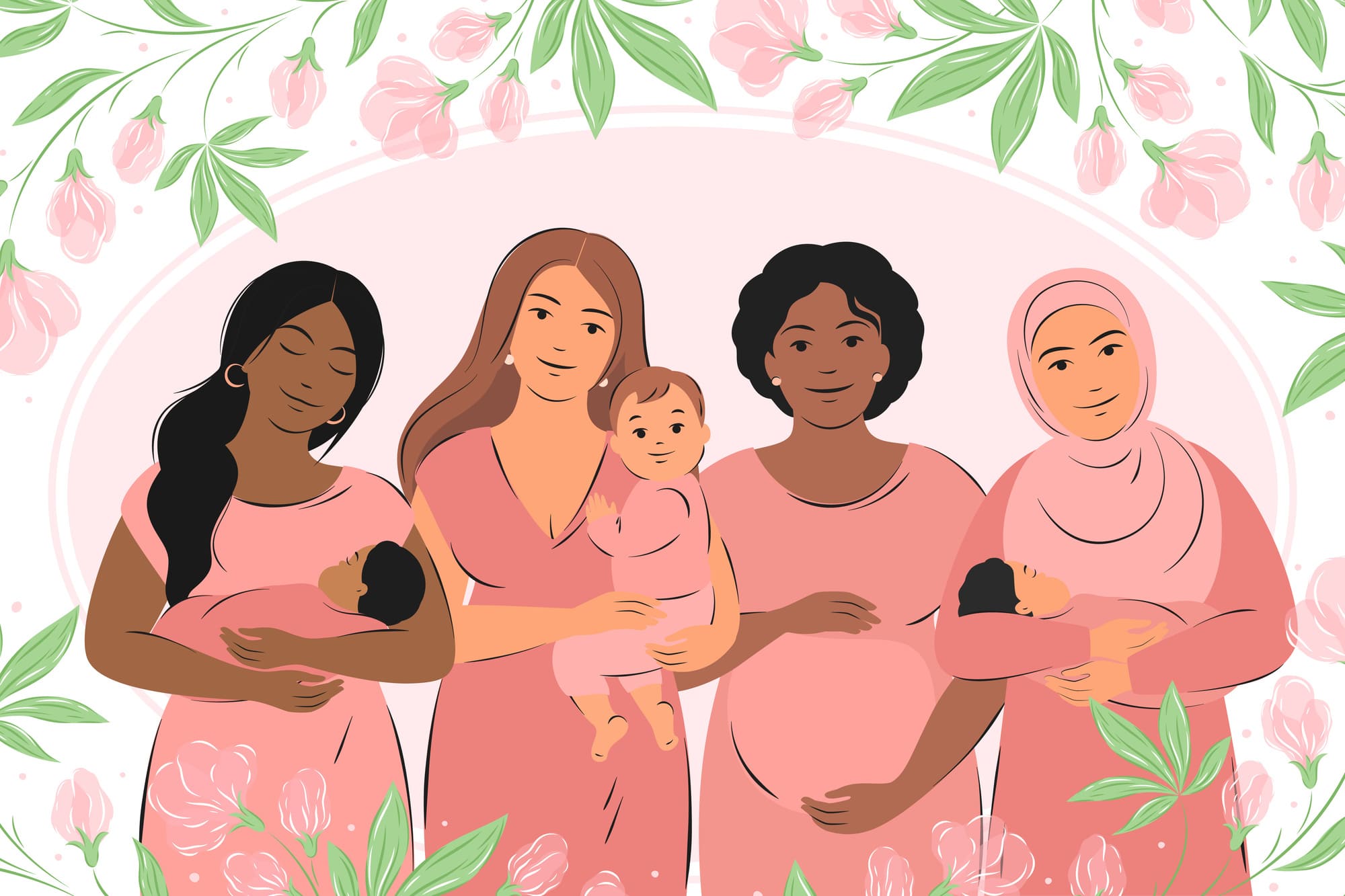
Illustration d’un groupe de femmes enceintes et avec enfants. Semaine mondiale de l'allaitement maternel.

World Breastfeeding Week takes place every year during the first week of August. It’s a key moment to raise awareness, offer support, and highlight the value of breastfeeding. Whether you’re pregnant, a new mom, or a support person, this week is for you.

What is World Breastfeeding Week (WBW)?

Origins (WHO, UNICEF, WABA)

World Breastfeeding Week was launched in 1992 by the World Alliance for Breastfeeding Action (WABA), in collaboration with the World Health Organization (WHO) and UNICEF. Together, they aimed to make breastfeeding a global public health priority by breaking down taboos, sharing accurate information, and strengthening family-friendly policies.

The event continues to receive support from WHO and UNICEF, who see breastfeeding as an essential act of care for both infants and mothers. In Canada, the Breastfeeding Committee for Canada actively promotes the initiative by sharing best practices with healthcare providers.

Official dates: August 1–7

WBW is celebrated in over 170 countries from August 1 to 7. These dates mark the launch of the Innocenti Declaration, a landmark document that recognizes breastfeeding as a basic right for every mother and child.

Theme for 2025

Each year, WABA, with support from WHO and UNICEF, sets a new theme to guide awareness campaigns and inspire local action around the world.

The 2025 theme is
“Enabling breastfeeding: Making a difference for working parents”

The focus is on building strong, long-lasting support systems for breastfeeding families—at home, at work, and within the community.

Why does breastfeeding deserve a global week?

Benefits for babies

Breast milk is packed with nutrients, antibodies, and love. It protects against infections, strengthens the immune system, and supports healthy cognitive and digestive development.

Benefits for mothers

Breastfeeding lowers the risk of breast and ovarian cancer, helps the body recover faster after childbirth, and deepens the emotional bond with the baby.

Public health impact

Supporting breastfeeding helps reduce health disparities and offers every child a fair start, no matter the family’s income or social status. It boosts infant health and immunity, reduces pressure on healthcare systems, and helps parents continue breastfeeding after maternity leave or returning to work.

Environmental and economic value

With no packaging, no industrial processing, and no transportation emissions, breastfeeding is also an eco-friendly choice. It’s a sustainable and cost-effective solution for families.

How is World Breastfeeding Week celebrated in Canada?

The Breastfeeding Challenge

Each August, thousands of families across Canada join a symbolic challenge to mark WBW. The goal? To celebrate the special bond between mother and child and highlight breastfeeding’s benefits for infant health.

Whether online or in person, the challenge creates a shared moment where families breastfeed together, normalize the practice in public, and help break down stigma. Local groups, birthing centers, and perinatal support teams often organize or promote these events.

Find official campaigns, tools, and resources on the World Breastfeeding Week website, which promotes global cooperation in support of breastfeeding.

Canada’s National Breastfeeding Week

Why two dates? (August vs. October)

In Canada, World Breastfeeding Week is recognized in August, but there’s also a second celebration in October, during the 40th week of the year. This timing helps mobilize more community-based resources, as families tend to be more available after the summer.

Why Canada celebrates again in October (Week 40)

In August, many services are closed, and families are often away on vacation. October offers a better window for local events, info booths, and awareness campaigns aimed at reducing breastfeeding inequalities.

Local events in Quebec (CLSCs, care centers, municipalities)

Across Quebec, local health clinics (CLSCs), perinatal centers, and municipalities organize info booths, family workshops, and community breastfeeding challenges. These events are often supported by healthcare professionals and public health partners.
Keep an eye out in September for activities near you.

The Breastfeeding Challenge in Quebec: A well-established tradition

Each October, Quebec families take part in the Breastfeeding Challenge during National Breastfeeding Week (Week 40). Nourri-Source leads this initiative and invites nursing families to gather, either online or in person, to celebrate their journey and encourage others to continue.

Over the years, many regions have hosted local editions of the challenge in CLSCs, parks, online, and in community centers. These gatherings are backed by healthcare professionals, nonprofit groups, and health-focused partners who all share the goal of supporting breastfeeding every day.

Nourri-Source encourages all breastfeeding families to join the virtual Breastfeeding Challenge and explore the events happening in their area.

Here’s how to participate in World Breastfeeding Week (WBW) or Canada’s National Breastfeeding Week.

Whether you feel more comfortable attending in person or joining online, there are plenty of activities for everyone: info booths, babywearing workshops, talks with IBCLCs consultants, and supportive discussion groups where moms can connect and share.

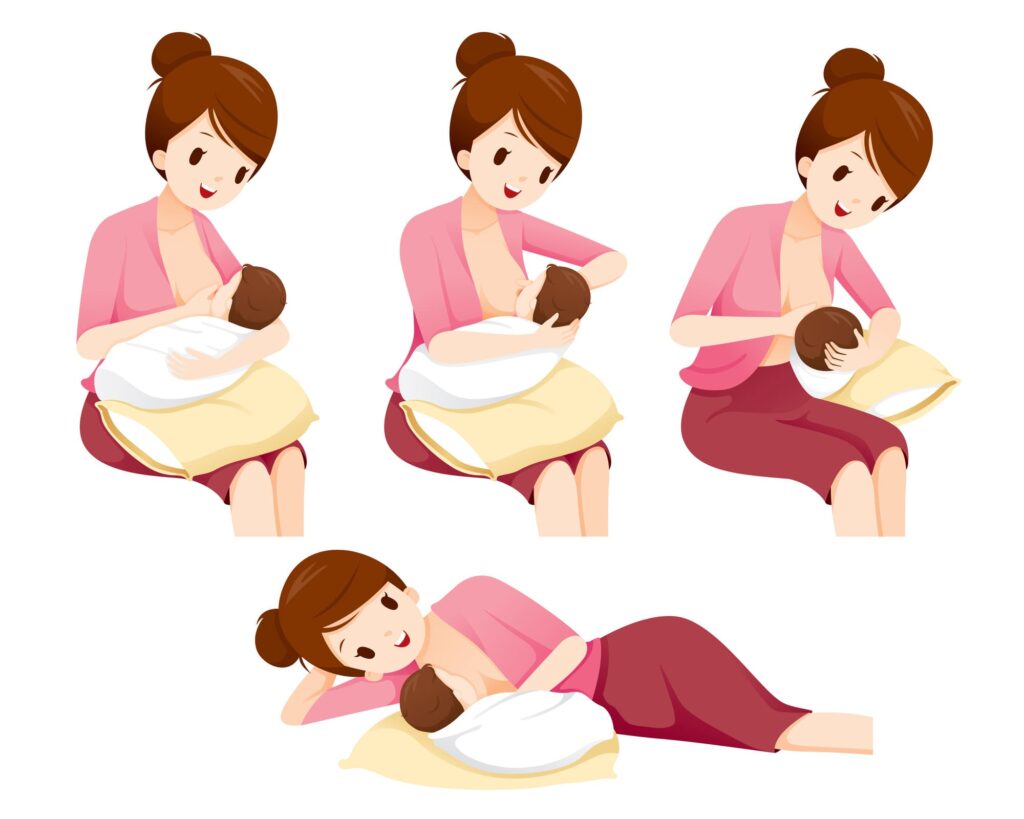
Une série de petite illustration de mamans avec leurs bébés dans différentes positions d'allaitement.

Follow the right resources

To stay updated on upcoming events and tips, follow these accounts on social media:

  • @nourrisource
  • @breastfeedingcanada
  • @LaLecheLeagueCanada

You can also explore hashtags like #WBW2025, #BreastfeedingChallenge, or #BreastfeedingQuebec for personal stories, online events, and shared posts from other moms.

Useful Links for Breastfeeding

To explore practical resources, expert advice, and upcoming events, visit:

Nourri-Source – Quebec’s breastfeeding support network
Breastfeeding Canada – Canada’s national breastfeeding resource center
La Leche League International – Global organization supporting breastfeeding worldwide

Helpful resources for new moms

Lactation consultants (IBCLC)

Certified IBCLCs are trained to help with any challenge—whether it’s pain, low weight gain, relactation, or latch issues.

Local support groups (e.g., Nourri-Source, Breastfeeding Quebec)

These groups offer a safe space to ask questions, share emotions, and build lasting connections, especially during those important first few weeks.

A tribute from La Joie en Rose

Breastfeeding is natural, but it’s also emotional, demanding, and deeply personal. At La Joie en Rose, we design each piece of breastmilk jewelry to honor that journey.

Our handcrafted rings, necklaces, and earrings are more than keepsakes; they hold your story, your strength, and your bond with your baby. Whether you’ve just started or are nearing the end of your breastfeeding journey, we offer a beautiful and lasting way to preserve the memories.

$2 per Breast Milk Jewel sold, all models combined, is donated to La Fédération Nourri-Source. A great way to support breastfeeding women and families.

By taking part in WBW or Canada’s October celebration, you join a movement led by health-focused organizations and community partners, like Nourri-Source and the Breastfeeding Committee for Canada. Together, they support families throughout their breastfeeding journey, no matter where it leads.

6 Tips for a positive breastfeeding journey

Jeune maman calme et prudente, assise sur un canapé-lit 
et allaitant son bébé

Breastfeeding is a unique experience, full of emotions, challenges, and precious moments. If you’re a new mom wondering how to make breastfeeding go smoothly, you’re in the right place. These 6 practical tips will help you approach this stage with more confidence and peace of mind, whether it’s your first baby or not.

1. Create a calm environment with your newborn

The early days of breastfeeding can feel overwhelming. Between milk coming in, figuring out latch, and dealing with uncertainty, it’s important to give yourself a calm, comforting space.

  • Choose a cozy spot with good back support.
  • Keep your spine and shoulders aligned so you can relax and help your baby latch more easily.
  • Avoid distractions and focus on your baby’s hunger cues, like rooting, fussiness, or bringing hands to mouth.
  • Skin-to-skin contact in the early days helps foster emotional bonding and stimulate milk production

2. Learn to position your baby properly from day one

Méthodes et positions pour l'allaitement maternel

A comfortable position is the foundation of a successful latch. Good positioning reduces discomfort, helps your baby feed effectively, and gets breastfeeding off to a great start.

  • Hold your baby tummy-to-tummy, with their mouth wide open and covering most of your nipple.
  • Their chin should touch your breast, and their lips should latch onto the areola, not just the nipple tip.
  • Try different breastfeeding positions to find what feels best for both of you.

Tip: Listen for a steady, deep sucking pattern. If it’s painful, gently break the latch and try again

3. Respect your rhythm and your baby’s

In the first few days, it’s normal to face a few hurdles. Every baby has their own pace; some feed often, others take their time. There’s no “perfect” schedule. Follow your baby’s lead and feed on demand to support healthy milk production.

  • Newborns often nurse 8 to 12 times every 24 hours.
  • Breast milk digests quickly, so there’s no need to stick to strict timing.
  • Look for signs your baby is full, like unlatching, relaxing, or falling asleep after feeding.

Trust yourself. Honoring your own rhythm and your baby’s needs help create a calm and effective routine.

4. Take care of your breasts and nipples

Nipple irritation or breast engorgement can happen, especially in the early weeks. With a few simple habits, you can ease discomfort and make nursing more enjoyable.

  • Let a bit of breast milk air-dry on your nipples after each feeding; it has natural healing properties.
  • Skip harsh soaps. Rinse gently with warm water.
  • If your breasts feel full or hard, offer a feeding or express a little milk manually or with a pump.
  • Massage gently to prevent clogged ducts.

If pain persists or cracks appear, reach out to a lactation consultant or breastfeeding specialist.

5. Surround yourself with supportive people

Breastfeeding is a learning process for both you and your baby. Facing challenges is normal. Don’t go through it alone.

  • Talk to other moms, join support groups, or attend breastfeeding workshops.
  • Certified lactation consultants can guide you through any concerns.
  • Your partner can be a great support, bringing water, assisting with  positioning, or offering encouragement.

Remember: you don’t have to be perfect. You’re learning together, one feed at a time.

6. Trust your instincts

Every mom and baby are different. What works for someone else may not work for you, and that’s okay.

  • Listen to your body. If something feels off or painful, speak up.
  • Watch your baby: if they gain weight, pee regularly, and seem relaxed after feeding, you’re on the right track.
  • Don’t let outside pressure shake your confidence. You know what’s best for your baby.

If you feel overwhelmed, in pain, or constantly frustrated, take a break, rest, and reach out for help when needed.

Your breastfeeding journey, your way

Successful breastfeeding isn’t about following strict rules; it’s about finding what works for you and your baby. These tips are here to support, reassure, and guide you as you create your own rhythm. Be gentle with yourself, celebrate the small wins, and remember: every feeding counts.

At La Joie en Rose, we believe every breastfeeding moment is worth celebrating. That’s why we create breast milk jewellery, unique keepsakes that let you carry the beauty of your breastfeeding journey with you, always.

What to Do with Leftover Breast Milk?

Tire-lait manuel utilisé pour recueillir le lait maternel

You’ve probably poured out a half-finished bottle of breast milk at least once—and felt a twinge of regret doing it. Every drop reflects time, energy, and, above all, love. So how can you avoid waste and make the most of your expressed milk? Let’s explore some simple, safe, and even creative ways to preserve it.

Breast Milk Storage Guidelines

Before thinking about reusing or repurposing breast milk, you need to know how long it stays safe:

  • At room temperature (68–72°F): Up to 4 hours
  • In the refrigerator: Up to 4 days
  • In the freezer, breast milk stays fresh for up to 6 months, but it’s best to use it within 3 months for optimal quality.

Once thawed, you can keep milk in the fridge for up to 24 hours—but never freeze it again. Set a two-hour limit to finish the milk once your baby starts drinking at room temperature. After that, bacteria can develop quickly.

Can You Freeze Milk That Hasn’t Been Drunk?

Yes, but only under certain conditions. If the milk is freshly pumped, hasn’t been heated, and hasn’t come into contact with your baby’s mouth, you can freeze it in a sterilized, breast milk-safe container. Always label it with the date and place it in the coldest part of the freezer.

You can safely freeze freshly expressed milk for up to six months, though using it within three helps retain its optimal taste and nutritional value. Once the 24 hours are up, go ahead and prepare a fresh bottle instead. If the milk sits out too long or your baby begins drinking from it, discard the remaining milk to keep things safe.

By following these steps, you’ll keep breast milk safe and preserve its quality for your baby.

Should You Keep Reheated Milk?

It’s tempting to put a half-full bottle back in the fridge, but once your baby’s lips touch the nipple, the risk of contamination rises. The rule is simple: after warming, use the milk within two hours.

Still, there are meaningful ways to give that leftover milk a second purpose.

How to Reuse Leftover Breast Milk

If you have safe, unused milk left over, here are gentle, creative ideas to give it a second life:

1. Make a Breast Milk Bath

Add a few spoonfuls of milk to your baby’s bath. This soothing soak can calm irritated skin and reduce redness.

2. Use Breast Milk to Soothe Diaper Rash or Sore Skin

Dip a soft cloth in milk and apply it to diaper rashes or sore nipples. Breast milk’s natural healing properties help hydrate and repair skin.

3. Try a DIY Face Mask

Apply a little milk to your face for a quick, natural beauty boost. Let it sit for a few minutes, then rinse off.

4. Make Homemade Breast Milk Soap

Use frozen breast milk to make gentle, homemade soap. It’s a thoughtful gift and a great way to avoid waste.

5. Donate to a Milk Bank

Milk banks accept donations from healthy moms to help premature or hospitalized babies. It’s a powerful act of generosity that turns your extra milk into life-saving nourishment.

Reach out to your local milk bank or maternity ward to find out how to donate.

6. Create a keepsake with La Joie en Rose.

Breast milk is more than just food—it represents your bond with your baby. At La Joie en Rose, we craft custom breast milk jewellery using just a small amount of milk.

Whether you choose a ring, pendant, or bracelet, each piece is handmade with care. It’s a beautiful way to transform a potentially frustrating moment into a lasting, meaningful keepsake.

Tips to Reduce Waste

Here are a few habits that help cut down on wasted milk:

  • Prepare smaller bottles, especially when your baby’s hunger is unpredictable.
  • Only thaw what your baby is likely to finish.
  • Always warm milk slowly in a water bath or bottle warmer.
  • Check the smell and texture before offering it.

Every Drop Counts

Breast milk is more than nutrition. It carries love, connection, and time. Unused milk still holds meaning—you can turn it into a baby bath, a skincare treat, or a beautiful piece of jewellery that tells your story.

At La Joie en Rose, we believe every drop matters. Interested in a keepsake made from your breast milk? We’re here to answer your questions and help you get started.